
Dr. Erik Stroes discusses APOC3 inhibition in familial chylomicronemia syndrome (FCS) and severe hypertriglyceridemia, focusing on its effects on triglyceride levels and acute pancreatitis risk. He also highlights new long-term data with olezarsen from the CORE-OLE study in patients with severe hypertriglyceridemia, presented at ESC Congress 2026.
advertisement
APOC3 Inhibition in FCS and Severe Hypertriglyceridemia
Share
Save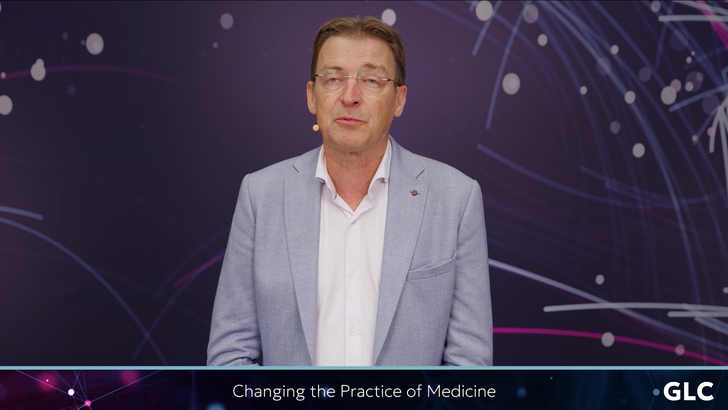
Restart
Resume
Share this program on:
Choose a format
Completing the pre-test is required to access this content.
Completing the pre-survey is required to view this content.
Ready to Claim Your Credits?
You have attempts to pass this post-test. Take your time and review carefully before submitting.
Good luck!
Details
Presenters
Overview
Provider(s)/Educational Partner(s)

Global Learning Collaborative (GLC) designs and executes continuing education rooted in evidence-based medicine, clinical need, knowledge gap analysis, and careful consideration of learner feedback. Our mission is to serve as an inventive and relevant resource for clinical content and educational interventions across a broad spectrum of specialties. GLC’s methodology is founded on a commitment to continuing medical education and the innovative assessment of its effects on clinical practice. Our goal is clear—to develop and deliver the best education in the most impactful manner and to verify its results with progressive outcomes research.Disclaimer
The views and opinions expressed in this educational activity are those of the faculty and do not necessarily represent the views of GLC. This presentation is not intended to define an exclusive course of patient management; the participant should use his/her clinical judgment, knowledge, experience, and diagnostic skills in applying or adopting for professional use any of the information provided herein. Any procedures, medications, or other courses of diagnosis or treatment discussed or suggested in this activity should not be used by clinicians without evaluation of their patients’ conditions and contraindications or dangers in use, review of any applicable manufacturer’s product information, and comparison with recommendations of other authorities. Links to other sites may be provided as additional sources of information.
Reproduction Prohibited
Reproduction of this material is not permitted without written permission from the copyright owner.

Recommended
Details
Presenters
Overview
Dr. Erik Stroes discusses APOC3 inhibition in familial chylomicronemia syndrome (FCS) and severe hypertriglyceridemia, focusing on its effects on triglyceride levels and acute pancreatitis risk. He also highlights new long-term data with olezarsen from the CORE-OLE study in patients with severe hypertriglyceridemia, presented at ESC Congress 2026.
Provider(s)/Educational Partner(s)
Global Learning Collaborative (GLC) designs and executes continuing education rooted in evidence-based medicine, clinical need, knowledge gap analysis, and careful consideration of learner feedback. Our mission is to serve as an inventive and relevant resource for clinical content and educational interventions across a broad spectrum of specialties. GLC’s methodology is founded on a commitment to continuing medical education and the innovative assessment of its effects on clinical practice. Our goal is clear—to develop and deliver the best education in the most impactful manner and to verify its results with progressive outcomes research.Disclaimer
The views and opinions expressed in this educational activity are those of the faculty and do not necessarily represent the views of GLC. This presentation is not intended to define an exclusive course of patient management; the participant should use his/her clinical judgment, knowledge, experience, and diagnostic skills in applying or adopting for professional use any of the information provided herein. Any procedures, medications, or other courses of diagnosis or treatment discussed or suggested in this activity should not be used by clinicians without evaluation of their patients’ conditions and contraindications or dangers in use, review of any applicable manufacturer’s product information, and comparison with recommendations of other authorities. Links to other sites may be provided as additional sources of information.
Reproduction Prohibited
Reproduction of this material is not permitted without written permission from the copyright owner.
Title
Program Chapters
Segment Chapters
Playlist:
advertisement
Recommended
Register
We’re glad to see you’re enjoying ReachMD…
but how about a more personalized experience?